NVIDIA AI Supercomputer Comes Online at Naval Postgraduate School

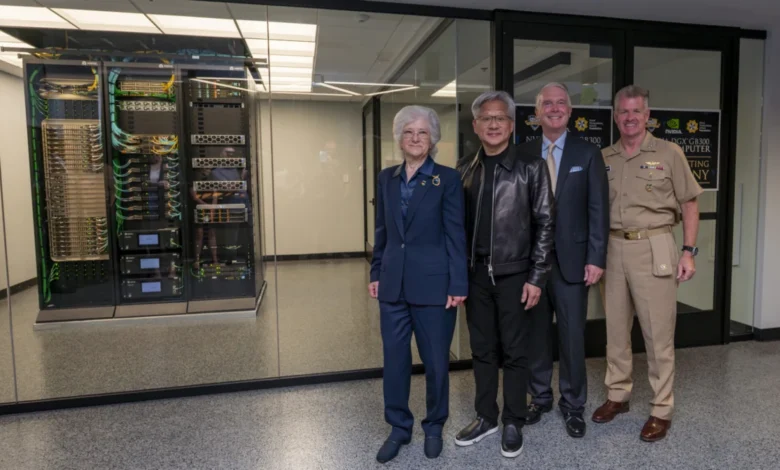
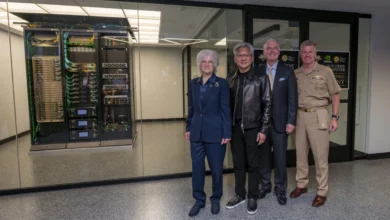
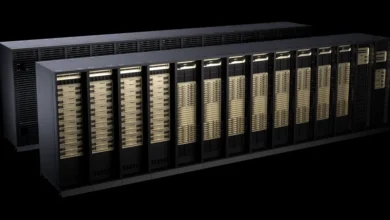
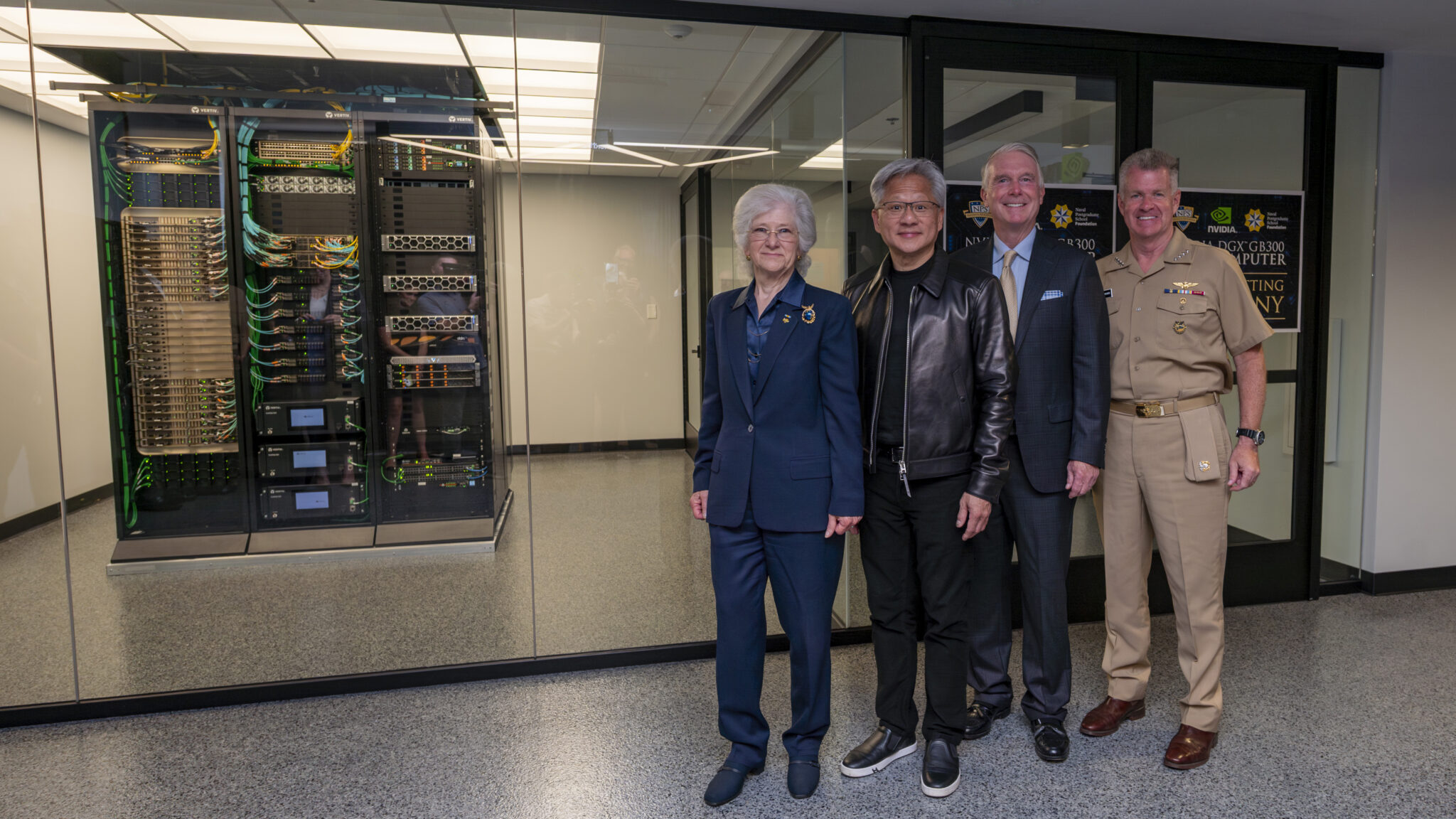
NVIDIA founder and CEO Jensen Huang marked a significant milestone in the advancement of artificial intelligence for national security today with the commissioning of an NVIDIA DGX GB300 system at the Naval Postgraduate School (NPS) in Monterey, California. This powerful AI platform, one of the most advanced of its kind globally, will now be fully accessible to students, researchers, and faculty at the U.S. military’s premier graduate institution, accelerating education and research in critical defense domains.
The installation of the DGX GB300 system underscores a deepening collaboration between NVIDIA and NPS, aimed at integrating cutting-edge AI capabilities into the core of military leadership development. This initiative is poised to equip future defense leaders with the insights and tools necessary to navigate an increasingly complex geopolitical landscape, where information superiority and rapid decision-making are paramount.
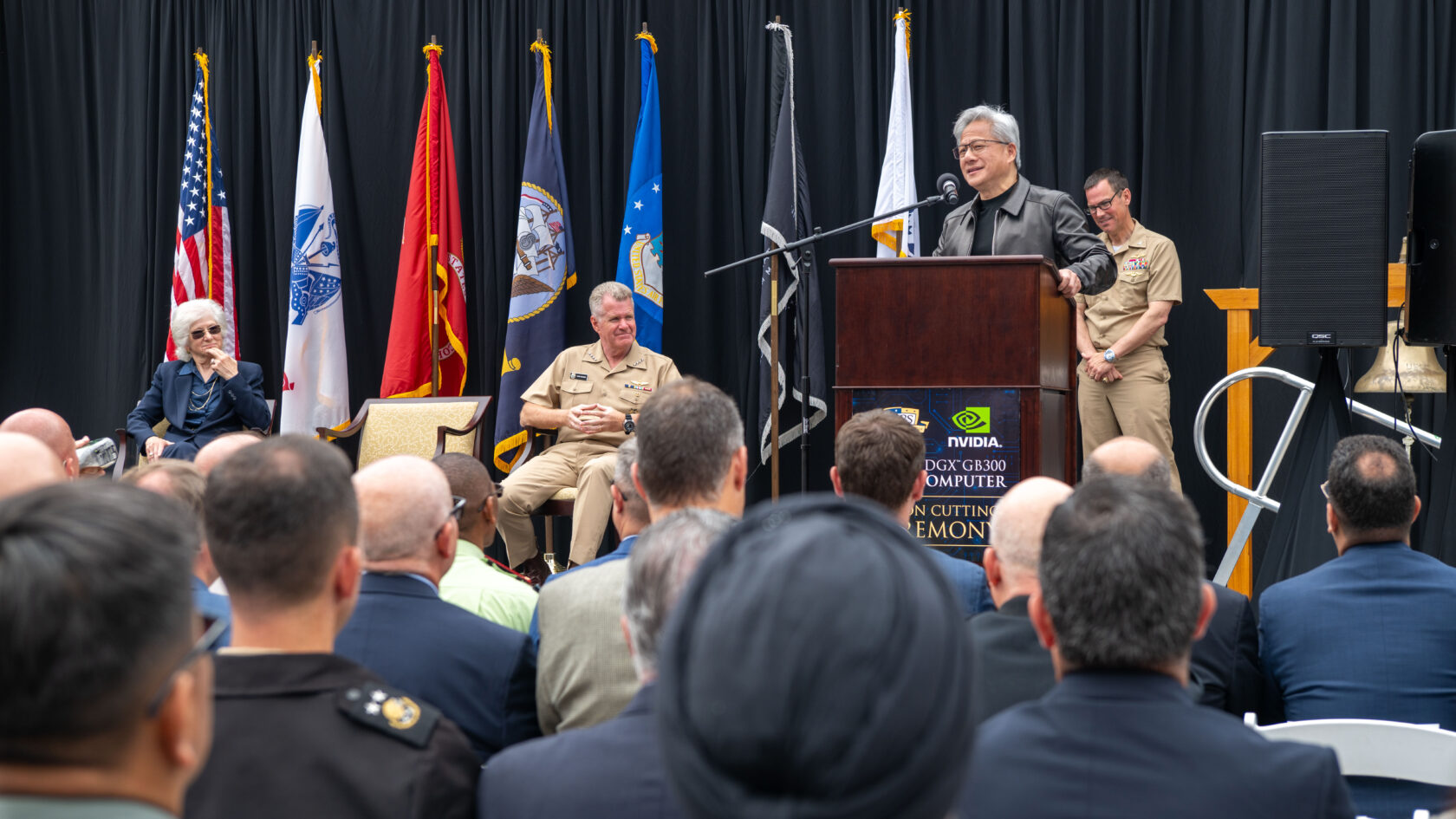
"Our nation depends on our men and women who fight on the front lines. Nothing is more valuable to you than information and insight, and information and insight in a timely way, and to understand its impact and consequence," Huang stated during the commissioning event. "I can’t imagine anything more important." His remarks highlighted the profound strategic value of AI in empowering military personnel with actionable intelligence, enabling them to make informed decisions with speed and precision.
The DGX GB300 supercomputer, powered by NVIDIA Mission Control software, provides NPS’s extensive community – comprising over 1,500 in-resident students and 600 faculty members – with unprecedented on-premises access to large-scale AI computing resources. This capability will fuel advancements in a wide array of applications, including sophisticated weather prediction models, robust cybersecurity frameworks, and dynamic disaster resilience and response planning. The system’s ability to handle both AI model training and inference means that complex algorithms can be developed, tested, and deployed with greater efficiency and effectiveness.
The commissioning ceremony was a key event within the school’s three-day Converge @ NPS event, a forum designed to foster innovation and collaboration. This latest development signifies an ongoing commitment to exploring and implementing AI-based technologies for both academic pursuits and practical, real-world defense applications. The establishment of the DGX GB300 at NPS follows the creation of an NVIDIA AI Technology Center on the Monterey campus, which serves as a dedicated hub for AI research and graduate-level instruction. The DGX GB300 now represents the technological cornerstone of this vital center.
Admiral Samuel Paparo, Commander of the U.S. Pacific Command, emphasized the transformative impact of this new infrastructure. "As we modernize our technology, we must also modernize how we educate our leaders," Admiral Paparo commented. "Access to advanced computing capability means NPS students and faculty understand the opportunities and responsibilities that come with these technologies." His statement points to the critical need for military leaders to not only understand AI’s potential but also its ethical implications and operational deployment challenges.
Training Leaders to Build With AI
The Naval Postgraduate School plays a unique and vital role in the U.S. defense establishment, educating active-duty officers from all branches of the military, as well as international partners. Its curriculum spans a broad spectrum of disciplines, from space operations and cybersecurity to oceanography and national security affairs. A hallmark of NPS education is its emphasis on applied research, ensuring that academic work directly addresses pressing real-world problems faced by the armed forces and national security agencies.
Jensen Huang further elaborated on the philosophy of leadership in the context of technological advancement. "Leadership is about being in service of something else. You’re in service of your team. You’re in service of your country. You’re in service of your mission," Huang told attendees. "And all of this technology is just tools to help you." This perspective frames AI not as a replacement for human leadership, but as a powerful enabler that can amplify the effectiveness of those tasked with critical responsibilities.
The DGX GB300 system is expected to inject significant technical depth into NPS’s diverse programs. Its advanced capabilities will enable the institution to train foundation models in-house, conduct high-fidelity simulations at an unprecedented scale, and develop AI tools with immediate practical applicability for defense operations. This self-sufficiency in AI development reduces reliance on external resources and fosters a more agile and responsive research environment.
Huang also offered practical advice to the assembled audience, encouraging them to engage directly with the technology, regardless of their technical background. "The most important advice that I would give to someone is to engage the technology," Huang advised. "It’s not as hard as you think it is, and the reason for that is because, on first principles, technology is supposed to get smarter and smarter over time." This sentiment aims to demystify AI and encourage widespread adoption and exploration among military professionals.
NVIDIA’s commitment extends beyond hardware provision. Through its Deep Learning Institute, the company has provided NPS faculty with instructor toolkits, facilitating the integration of AI education across various departmental curricula. This comprehensive approach ensures that AI literacy becomes a foundational element of graduate-level instruction at NPS, preparing officers for an AI-enabled future.
Admiral Paparo reiterated the importance of this educational focus, particularly in the context of rapidly evolving combat environments. "Many of you will command in AI-enabled environments. Information will move at lightning speeds, compressing response times," Paparo stated. "Our advantage will come from leaders, like you, who can use the technology to see, understand, decide and act faster while exercising the judgment, experience and leadership that machines cannot provide. That education is happening here at NPS." His words underscore the belief that AI will augment, not supplant, the critical human elements of military leadership.
From Ocean Models to Digital Twins
The Naval Postgraduate School has a proven track record of leveraging its academic environment for tangible defense innovation, frequently hosting hackathons that have yielded significant advances in areas such as autonomous systems, ocean research, and operational planning. These applied research endeavors, often characterized by their complexity and data-intensive nature, require substantial computing power to scale effectively and translate theoretical concepts into practical solutions.
Researchers at NPS are actively employing AI to tackle some of the most pressing challenges in maritime and atmospheric science. This includes developing sophisticated models for predicting sea conditions, forecasting atmospheric changes with greater accuracy, and constructing highly detailed digital twins of complex environments. These projects directly contribute to NPS’s deep-seated expertise in scientific domains crucial for naval operations and national security.
The newly commissioned DGX GB300 supercomputer will be instrumental in powering these demanding workloads on campus. Its advanced processing capabilities will allow for more complex simulations, faster data analysis, and the development of more sophisticated AI models. This will accelerate the pace of discovery and innovation in critical research areas.
In collaboration with MITRE, a non-profit research and development organization, NPS has been developing a framework that utilizes NVIDIA Omniverse libraries. This framework enables the creation of high-fidelity digital twin environments, which are crucial for simulating real-world navigation and decision-making scenarios under conditions of uncertainty. These digital twins provide a safe and controlled environment for testing new strategies and technologies before they are deployed in the field, offering a significant advantage in operational planning and risk mitigation.
Those interested in learning more about NPS and NVIDIA’s ongoing collaboration and the specific applications of AI modeling and simulation in defense can refer to presentations by NPS and NVIDIA researchers at NVIDIA GTC Washington, D.C., available on demand.

NVIDIA Partner Ecosystem Brings AI Infrastructure to Life
The successful deployment of the DGX GB300 at NPS was a collaborative effort, involving key partners from NVIDIA’s extensive ecosystem of hardware and systems integration specialists. The contributions of DDN, VAST Data, and Vertiv were critical in bringing this advanced AI infrastructure online.
DDN, a leader in high-performance data infrastructure, provided robust solutions to ensure that researchers could efficiently access, manage, protect, and scale the vast amounts of data required for demanding AI workloads. Their technology is designed to overcome the data bottlenecks that often hinder AI development, ensuring that the DGX GB300 can operate at its full potential. This high-performance data fabric is essential for training complex AI models that require rapid ingestion and processing of massive datasets.
VAST Data contributed its unified data platform, which is designed to simplify data access and management across diverse computing environments, including edge, core, and cloud. This unified approach ensures secure and streamlined data handling, which is paramount for maintaining data integrity and enabling collaborative research efforts within the NPS community. Their platform is engineered to provide both high throughput and low latency, critical for real-time AI applications.
Vertiv played a crucial role in the physical implementation and operational readiness of the DGX GB300 system. They provided the essential racks, cooling, and power infrastructure required to house and operate the supercomputer reliably. Furthermore, Vertiv offered comprehensive support, including installation sequencing, rigorous testing, commissioning services, and ongoing fluid management and monitoring, ensuring the system’s stability and longevity. Their expertise in data center infrastructure is vital for supporting the high-density and power-intensive computing needs of modern AI supercomputers.
The successful integration of these specialized contributions from DDN, VAST Data, and Vertiv highlights the power of a robust partner ecosystem in delivering complex, cutting-edge technological solutions for critical national security applications. This multi-faceted approach ensures that the DGX GB300 at NPS is not just a powerful piece of hardware, but a fully realized, operational AI platform ready to drive innovation and educate the next generation of defense leaders.
Related posts: